


A broken garage door spring is one of the most common service calls in residential garage door repair, and it is also one of the most misunderstood. Most homeowners do not think about their springs until the door stops working, and when it does, the failure is usually abrupt. A loud bang from the garage, a door that suddenly feels impossibly heavy, or an opener that runs but cannot lift the door are all classic signs that a spring has broken. In Santa Monica, where coastal conditions accelerate metal fatigue, spring failures tend to happen sooner than homeowners in drier climates typically expect.
This guide covers how garage door springs work, the difference between the two main spring types, why they fail, and what professional replacement actually involves.
What Garage Door Springs Actually Do
Garage door springs do the majority of the physical work every time the door moves. A standard residential garage door weighs anywhere from 130 to 400 pounds depending on the material and insulation. The springs store mechanical energy when the door closes and release that energy to counterbalance the weight when the door opens. Without functioning springs, the opener motor would need to lift the full weight of the door on its own, which it is not designed to do. Most residential openers are rated to lift only 10 to 20 pounds of unbalanced load. The springs carry the rest.
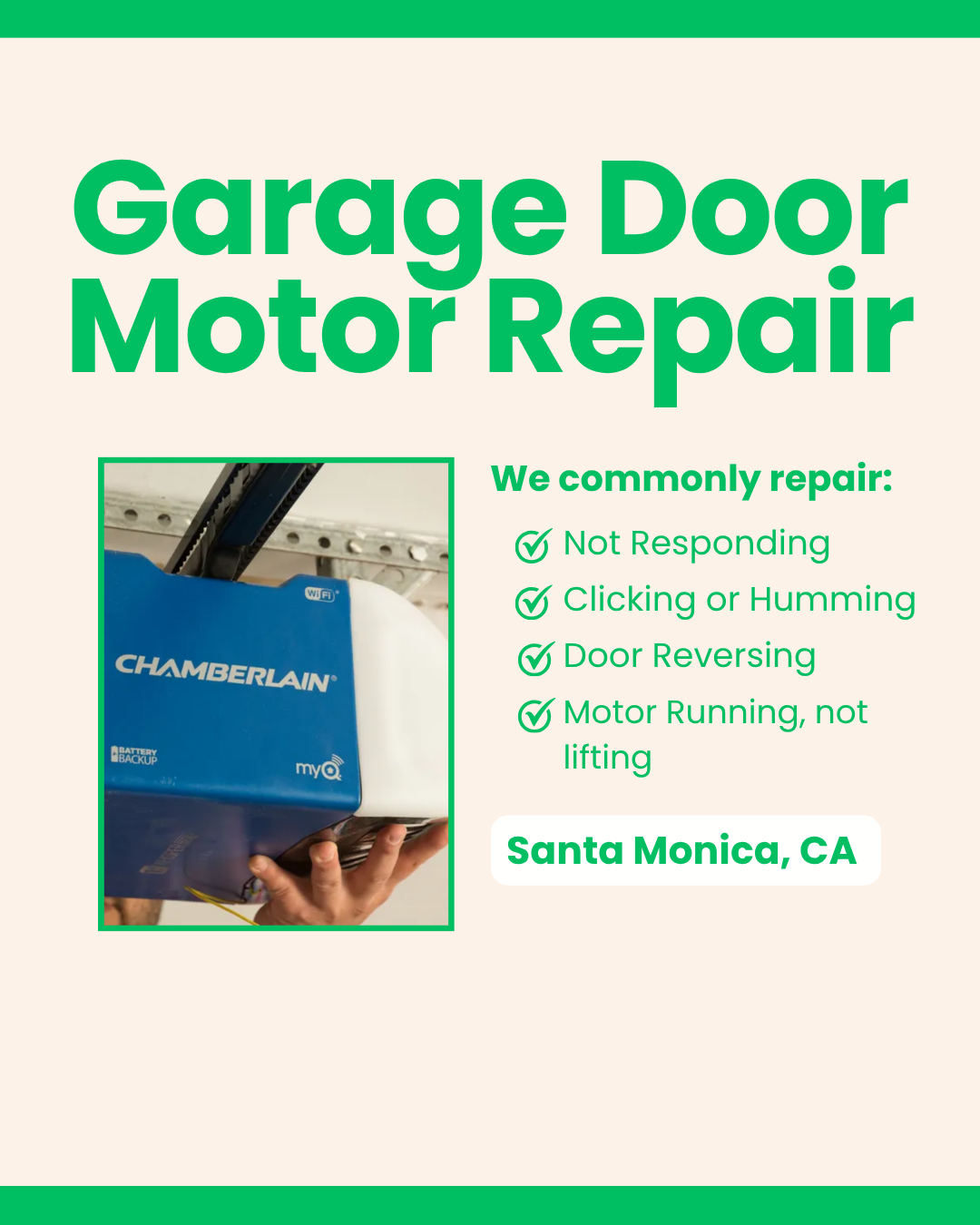
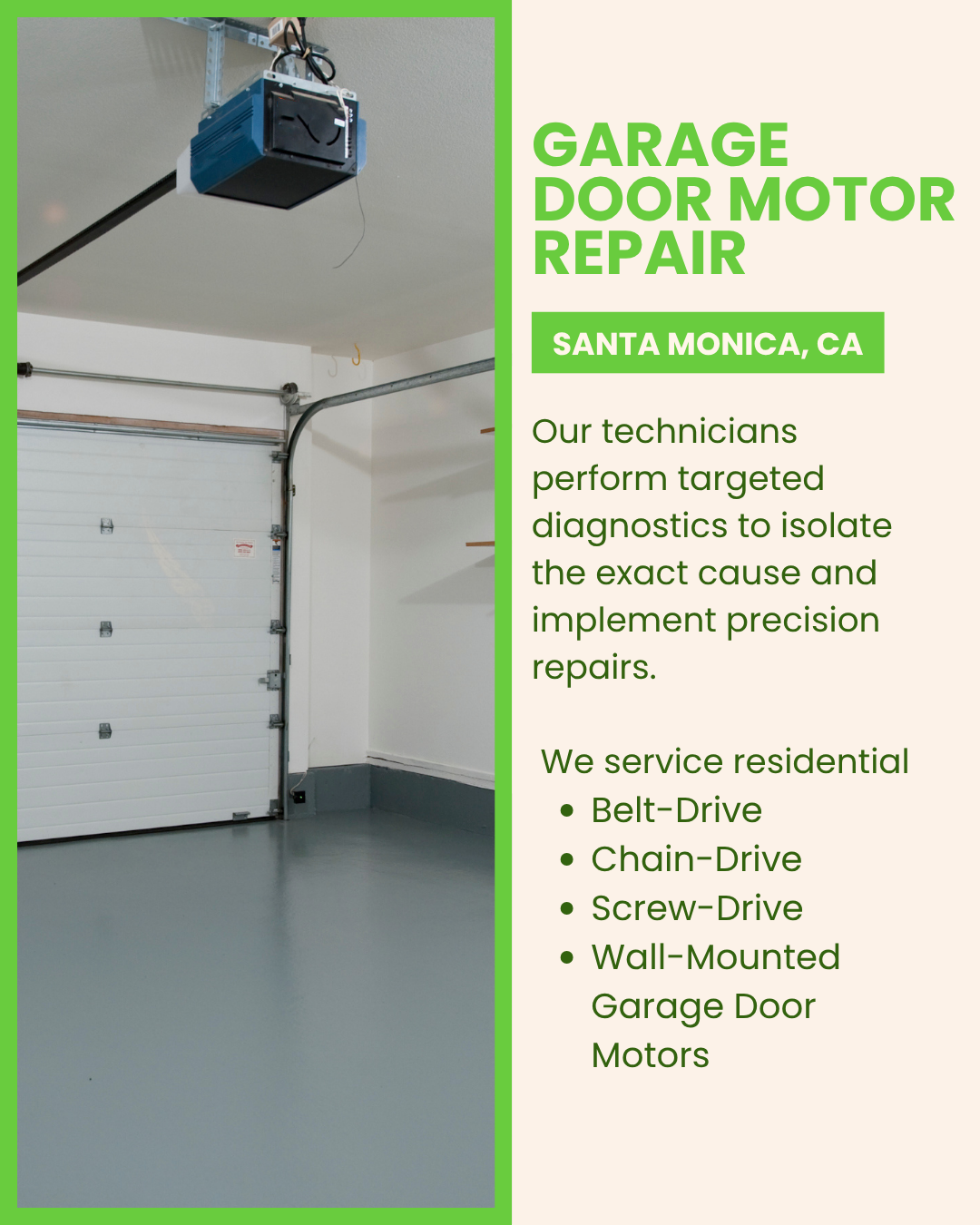
This is why a broken spring typically stops the door completely even when the opener motor is running fine. The motor is not malfunctioning. It simply cannot move a door that the springs are no longer counterbalancing.
Torsion Springs vs Extension Springs
There are two main spring configurations used in residential garage doors, and they work differently, fail differently, and require different replacement approaches.
Torsion springs are mounted horizontally on a metal shaft directly above the garage door opening. When the door closes, the springs wind up and store torque. When the door opens, they unwind and transfer that stored energy through cables and drums to lift the door. Most newer homes and garage doors installed in the last 15 to 20 years use torsion spring systems because they are more durable, provide smoother and more balanced operation, and are generally safer when they fail. A broken torsion spring stays on the shaft rather than flying loose.
Extension springs run along the horizontal tracks on either side of the door and stretch and contract as the door moves. They are common in older installations and in garages with low headroom where a torsion spring shaft would not fit. Extension springs have a higher failure risk in terms of what happens when they break because a snapped spring under tension can release significant force. Properly installed extension spring systems include safety cables threaded through the springs to contain them if they snap, but worn or improperly installed systems may not have this protection.
For Santa Monica homes, torsion spring systems are generally the better long-term choice when a full replacement is being considered, both for performance and for the contained failure mode.
Why Springs Fail Faster Near the Coast
Garage door springs are rated by cycle life, with a standard spring rated for roughly 10,000 cycles. At two cycles per day, that works out to approximately 13 to 14 years of use under normal conditions. However, several factors shorten that lifespan significantly in coastal environments like Santa Monica.
Salt air accelerates oxidation on the spring coils, which weakens the metal over time and makes it more prone to fatigue cracking. Springs that are not regularly lubricated develop surface rust that accelerates this process further. Temperature and humidity cycling, which happens daily along the coast as the marine layer burns off in the afternoon and returns overnight, causes the metal to expand and contract repeatedly over thousands of cycles. This micro-stress accumulates and contributes to earlier failure than the cycle rating alone would suggest.
Homeowners in Santa Monica, Venice, Mar Vista, and other Westside neighborhoods who notice their springs showing surface rust or who have not had the springs inspected or lubricated in several years are likely operating closer to the end of the spring lifespan than they realize.
The Signs That Replacement Is Coming
Garage door springs rarely give extended warning before they break, but there are a few signals worth knowing. A door that feels heavier than usual when lifted manually with the opener disconnected suggests the springs are losing tension and not providing full counterbalance. A door that moves unevenly or tilts to one side during operation can indicate that one spring in a two-spring system has weakened more than the other. Visible rust, gaps in the spring coils, or a spring that looks stretched or deformed are all signs that replacement should be scheduled before the spring fails completely.
The loud bang that homeowners often describe hearing from the garage is the sound of a spring breaking under tension. It is frequently mistaken for an intruder or something falling. After that sound, the door will typically not open with the automatic opener, or will open only a few inches before stopping.
What Professional Spring Replacement Involves
Garage door spring replacement is one of the service categories where the case for professional installation is clearest. Springs under torsion hold a significant amount of stored energy, and releasing or winding that energy without the correct tools and training is genuinely dangerous. Injuries from improperly handled springs are well-documented and tend to be severe. This is not a cautionary exaggeration. It is the reason that experienced technicians use calibrated winding bars and follow a precise sequence when working with torsion springs.
A proper spring replacement begins with a full assessment of the door system, not just the broken spring. The technician checks door balance, inspects cables and drums for wear, examines the tracks and rollers, and confirms that the opener force settings are appropriate for the door weight after the new springs are installed. Replacing a spring without checking cable condition is a common shortcut that leads to a cable failure shortly after, which is why a thorough inspection at the time of replacement matters.
Spring selection involves matching the spring wire diameter, inside diameter, and length to the specific weight and height of the door. Installing springs that are not correctly matched to the door results in an imbalanced system that shortens both the new spring lifespan and the opener lifespan. When both springs in a two-spring torsion system are being replaced, it is standard practice to replace both at the same time even if only one has broken. Springs installed together wear together, and replacing only the broken one leaves an aging spring doing unequal work.
After installation, the technician manually tests door balance by disconnecting the opener and checking whether the door stays in place when raised to mid-height. A properly balanced door should remain stationary at that position without assistance. The opener is then reconnected and the full system is tested through multiple cycles.
When your garage door spring breaks in Santa Monica, WIN Garage Door provides same-day replacement service across the Westside. Call (310) 818-7272 or visit wingaragedoorrepair.com for a free on-site estimate.