

Replacing a garage door is one of those home improvement decisions that touches more than it seems. It affects curb appeal, home security, energy efficiency, and the daily convenience of getting in and out of your property. For Santa Monica homeowners, it also involves a set of environmental considerations that are specific to coastal Southern California and that meaningfully narrow down which materials and products are actually worth investing in. This guide walks through what the installation process involves, which door types perform best in the local climate, and what to expect when you work with a professional installation team.
Why Installation Quality Matters More Than the Door Alone
A garage door is only as good as the installation behind it. A well-made door hung on an improperly leveled frame, with a misaligned track or an undersized opener, will develop problems quickly regardless of how much was spent on the product itself. Conversely, a properly installed door with correctly tensioned springs, aligned tracks, and a matched opener will run quietly and reliably for years with minimal maintenance.
In Santa Monica, installation quality also affects how well the door holds up against the specific stresses of the local environment. Salt air finds its way into every gap and exposed metal surface. A door that is not properly sealed at the bottom and sides will allow moisture ingress that accelerates corrosion on the hardware, the tracks, and the spring system. Getting the installation right from the start is not just about function on day one. It is about preserving the investment over the full life of the door.
Choosing the Right Material for Coastal Conditions
Material selection is the single most consequential decision in a garage door installation for a home near the ocean. Each material behaves differently under salt air exposure, UV radiation, and the humidity cycling that is a daily reality in neighborhoods from Ocean Park to North of Montana.
Steel is the most common material in residential garage doors and for good reason. It is durable, widely available in a range of styles and finishes, and relatively affordable. For coastal applications, insulated steel is the better choice over single-skin panels. The insulation layer adds structural rigidity that resists denting and warping, and the interior facing protects the steel core from moisture on both sides. Galvanized steel components and rust-inhibiting primer coatings are standard in quality coastal installations and worth confirming when selecting a product.
Aluminum is genuinely well-suited to the Santa Monica environment because it does not rust. It is lighter than steel, which reduces strain on the opener and the spring system, and it holds paint well over time without the corrosion concerns that come with steel in salt air. Full-view aluminum doors with glass panels are particularly popular in contemporary Santa Monica homes and perform well in coastal conditions when properly sealed and maintained.
Wood and wood composite materials present more maintenance demands near the coast. Natural wood is susceptible to moisture absorption, swelling, and paint degradation in high-humidity environments, which means more frequent refinishing and a shorter effective lifespan compared to steel or aluminum. Wood composite options are more resistant but still require consistent upkeep. For homeowners who want the aesthetic of wood, a wood-look composite or a steel door with a wood-grain finish is typically the more practical choice for this climate.
Fiberglass is less common in the garage door market but is worth mentioning for coastal applications. It does not corrode and handles moisture well, though it can become brittle with prolonged UV exposure and is generally limited in the range of styles available.
Door Styles That Work for Santa Monica Homes
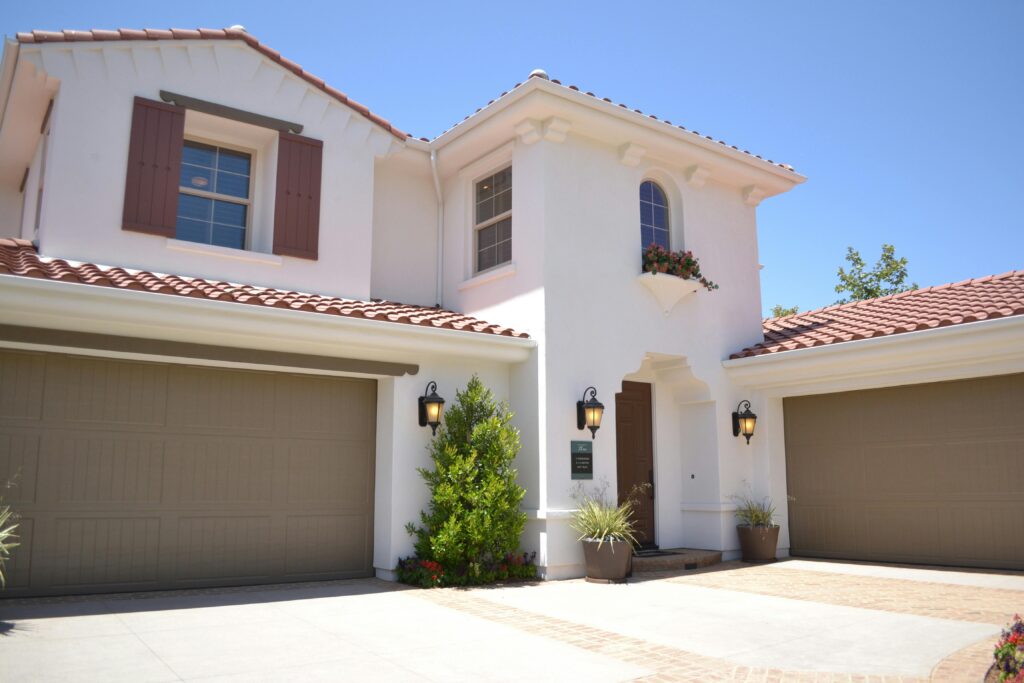
The architectural character of Santa Monica homes spans a wide range, from mid-century modern bungalows and Spanish colonial residences to contemporary new construction and beach cottages. Garage door style selection should take the home’s existing architecture into account rather than treating it as a purely functional decision.
Flush panel and modern steel doors with clean horizontal lines are a natural fit for contemporary and mid-century modern homes. They read as intentional design elements rather than afterthoughts and are available in aluminum, insulated steel, and full-view glass configurations that work well with open floor plan interiors visible through the garage.
Raised panel doors remain the most common residential option and suit traditional and transitional home styles. They are widely available, come in nearly every material and finish, and are straightforward to source and service. For homes where the garage is not a primary visual feature of the facade, a well-chosen raised panel door in a neutral finish is a reliable and cost-effective solution.
Carriage house style doors offer a more traditional or craftsman aesthetic and are available in steel and composite materials that replicate the look without the maintenance demands of actual swing-out carriage doors. In neighborhoods where architectural character is a priority, these can significantly improve the overall appearance of the home’s street presence.
Full-view glass doors have become increasingly popular in Santa Monica and Westside neighborhoods, particularly in homes where the garage doubles as a workspace, gym, or entertaining area. They allow natural light into the space and create a visual connection between the interior and the exterior that suits the indoor-outdoor lifestyle common in the area.
What the Installation Process Involves
A professional garage door installation covers more than removing the old door and hanging a new one. The process begins with a precise measurement of the rough opening, including width, height, headroom, and side room clearances, all of which determine which door sizes and opener configurations are compatible with the space.
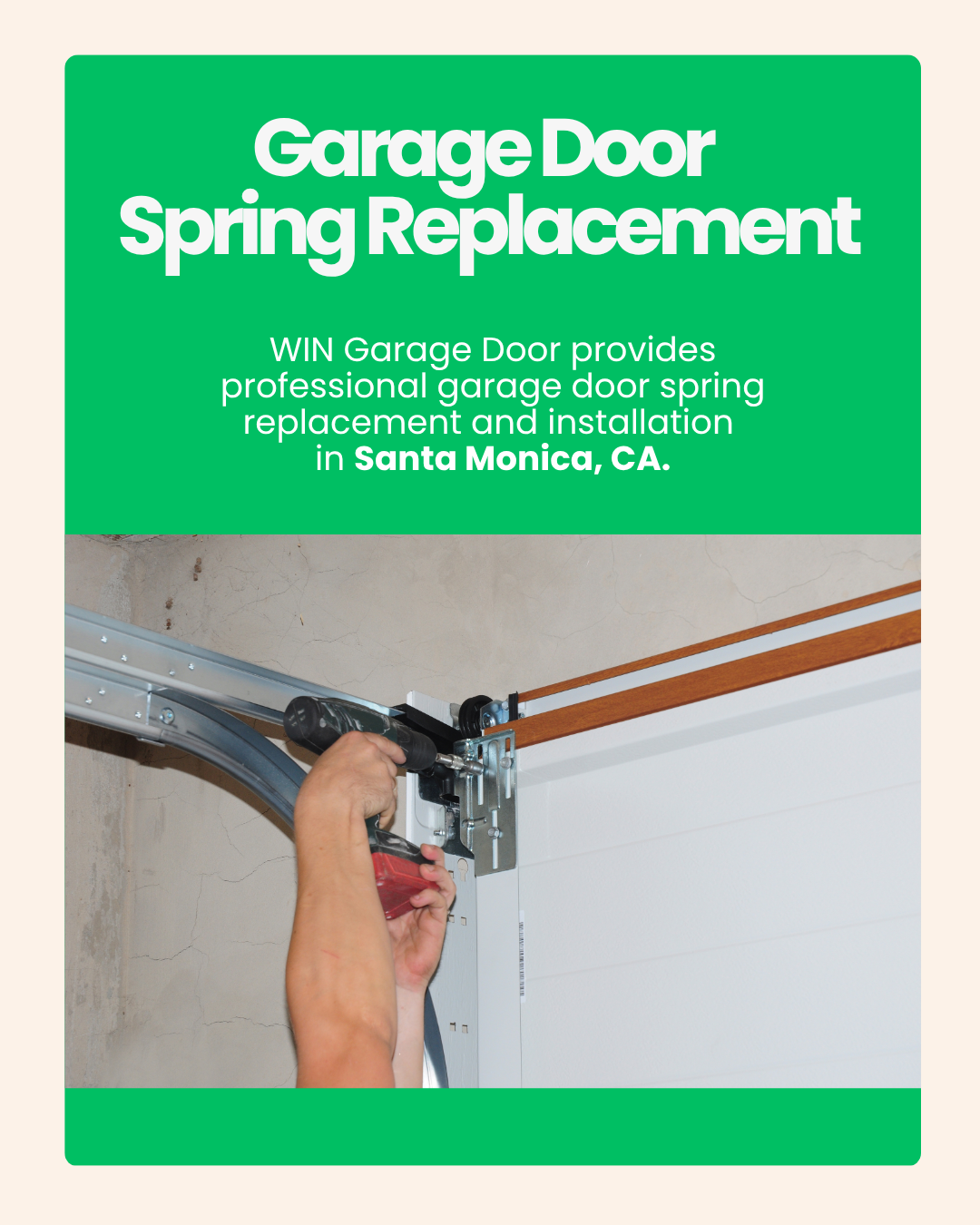
The old door, track, and hardware are removed and the opening is inspected for any structural issues, rot, or damage that should be addressed before the new installation proceeds. New track sections are installed and leveled, the door panels are assembled in sequence, and the spring system is tensioned to the specific weight of the door. Spring tensioning is one of the most technically demanding parts of the installation and one of the most consequential for long-term performance. Incorrectly tensioned springs place stress on the opener, cause the door to move unevenly, and can create a safety hazard if a spring fails under improper load.
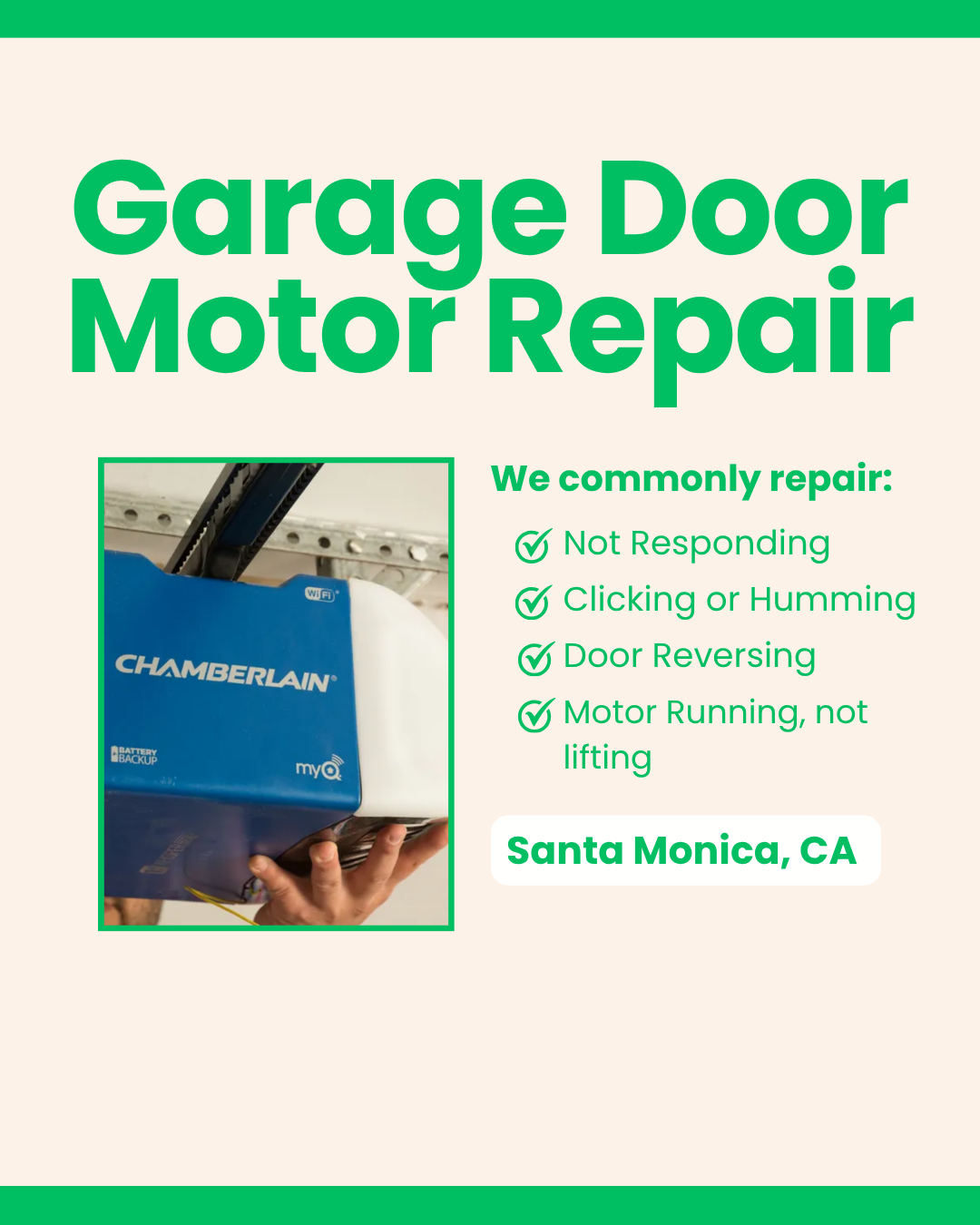
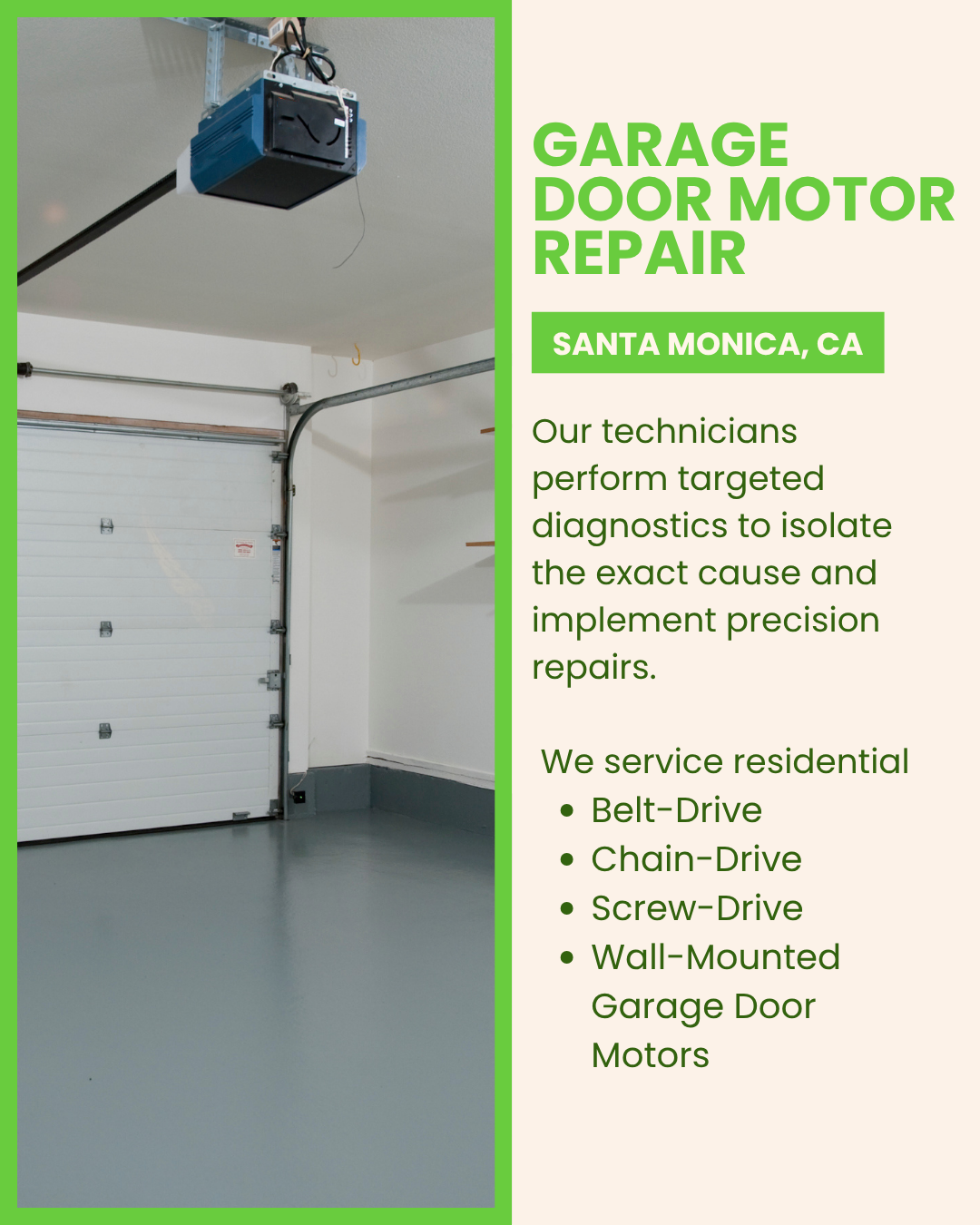
The opener is mounted and connected to the door, and the full system is tested through multiple open and close cycles with the auto-reverse safety function verified. At the end of a proper installation, the door should move smoothly and quietly, sit level in the closed position, and respond consistently to both the wall button and the remote.
WIN Garage Door handles full residential installations across Santa Monica and the Westside, from door selection through final system testing. Call (310) 818-7272 or visit wingaragedoorrepair.com for a free on-site estimate and same-day scheduling.